
By Craig Lester, originally released in the Farming Smarter Fall 2025 magazine.
Farmland soil erosion is not an issue to blow off.
With land now valued at over $200,000 per acre in southern Alberta and visible signs of valuable topsoil blowing from fields into ditches and neighbouring properties, it's become evident that this is a growing concern.
That’s why Farming Smarter launched its Saving Soils project that researches a number of ways to reduce soil erosion through reduced tillage, cover cropping, living mulches and integration, and innovative crop systems.
The initiative looks to reduce erosion in regions where traditional tillage and high winds can quickly strip valuable topsoil.
“The goal of the program is just to stop the land from blowing,” says Farming Smarter Executive Director Ken Coles.
Despite a lack of funding available for research projects like this, the Farming Smarter team pieced together philanthropic support from the Weston Foundation, RBC Tech for Nature, and Farmers for Climate Solutions to help pull it off.
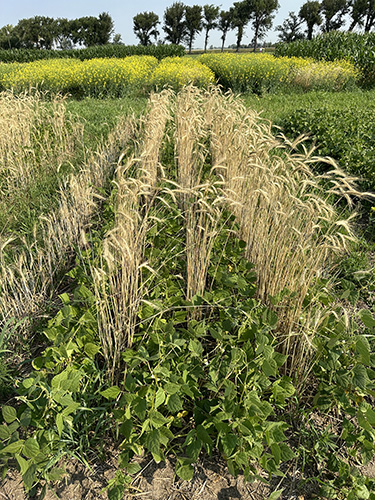 |
| Dry beans grow between rows of fall rye cover crops Credit: Farming Smarter |
Cover Cropping
Cover cropping shows promising results; however, it requires a balancing act when using this tool, which can protect fragile soils but also comes with risks if not managed carefully.
Coles emphasizes that cover crops are not a simple, one-size-fits-all solution and if they’re not done right you will damage the crop.
“Cover crops are an agronomist’s dream, because it’s complicated. We’re learning that even in our trials.”
Moisture is often the limiting factor in southern Alberta, with the dry, arid conditions. While irrigation helps with this issue, the irrigation districts don’t let the water flow until mid-May, leaving a short growing season where cover crops can compete directly with cash crops like canola, beans, or potatoes.
Research Insights
Farming Smarter tests fall rye seeded in late September at various research sites and terminated under different scenarios, including pre-seed burn down, in-crop spraying, and roller crimping.
Results are mixed. In some cases, yields drops significantly if cover crops get terminated too late. In others, such as dry beans, yields actually improved, an unexpected finding the team plans to study further.
Prior to the research, Coles was skeptical that the cover crops would be a benefit as they would steal valuable nutrients from the cash crop.
“To my surprise, the cover crops actually didn’t compromise the yield unless we let it get to that longer growth stage,” Coles explained.
Cover crops also showed benefits beyond yield. Flea beetle damage in canola reduced where cover crops provided soil cover.
“The flea beetle damage in this one is way less than without the cover and the flea beetles were bad.”
Fall rye stood out for its growth, hardiness, and soil protection. Winter wheat, on the other hand, proved easier to kill, while spring barley seeded in the fall reliably winter-killed.
“Fall rye, I think, is the best option we have for a fall cover crop. It grows the most. It has the most aggressive, the best winter hardiness, but it does have an allelopathic effect when you kill it and it breaks down.”
Timing remains a critical piece. Cover crops harvested early reduced competition with the main crop, while in-crop termination created shading and delayed canopy closure potentially compromising yields.
Coles underscored that successful adoption depends on careful agronomy and ongoing adaptation.
“You've got to be willing to put in the time and to understand the agronomic details and where you can get the wins.”
The economics also play a role. While the potential is there, farmers must weigh input costs, seeding equipment capabilities, and risk management.
At the end of the day, Coles says producers are the ones taking the chances.
“I do think we have to take it with caution and I do think we have to respect that the amount of agronomy that we need to figure out to be confident in recommendations that we’re sending out to farmers.”
Knowledge Sharing
Cover crops in southern Alberta show both promise and peril. They can improve soil protection and even boost yields in certain situations, but missteps in species selection, timing, or management can do real damage.
Coles says the journey is about a willingness to learn, adapt, and test. For farmers, that means acknowledging the risks and the rewards of bringing cover crops into the mix.
One of the Saving Soils program biggest strengths is its role in extension. By combining multiple research projects under the Saving Soils umbrella, Farming Smarter created a clear platform for outreach and farmer engagement.
“We've made a flagship of this program for extension purposes. It's been beneficial to have all of the different trials within a single program. It gives us a good framework for focusing on the research ideas that we're doing.”
Now that the program has hit full stride, Farming Smarter’s goal is to continue building on its successes and extending the knowledge to producers.
By focusing on practical conservation approaches, Saving Soils is not only advancing soil research but also ensuring that farmers have tools that protect soils while remaining economically viable.
 |
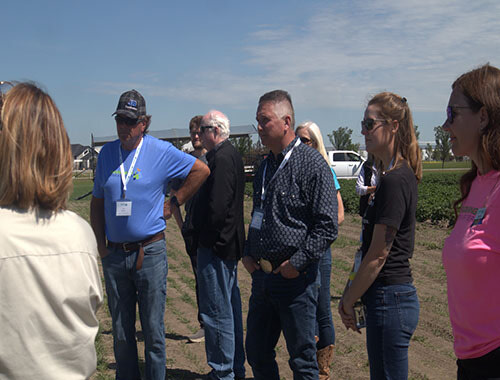
| Guests at the 2025 Farming Smarter Field School walk through research plots of canola grown in cover crops as part of the Saving Soils trials. Credit: Farming Smarter |
Keep the learning going!
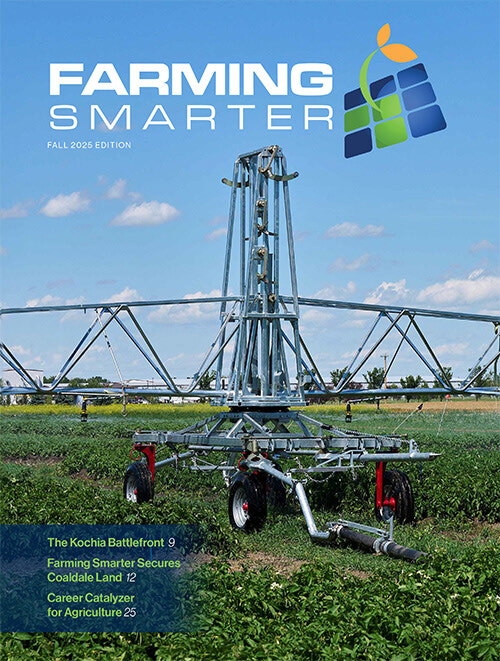
Read the rest of the Fall 2025 magazine or check out our Blowing Soil series!
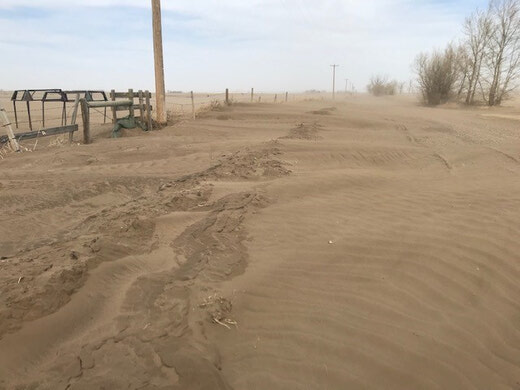
Soil erosion has negative effects, not just for the landowner losing precious soil, but also for neighbouring lands, roads, ditches, and buildings. In Alberta, the Soil Conservation Act and the Agricultural Service Board Act pair up to provide protection for this soil and help ensure longevity of agriculture in the province.
Other Articles
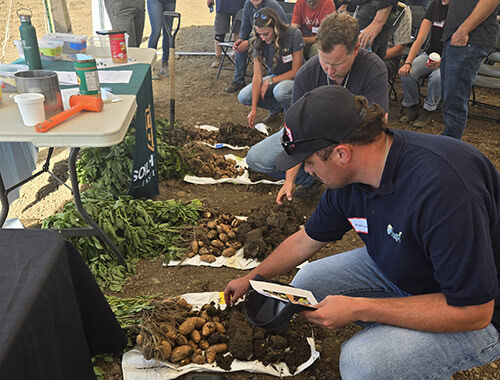
In agriculture, local conditions require local solutions. Specialty crops like potatoes and sugar beets underpin entire processing industries in southern Alberta yet lack region-specific information. Farming Smarter is working with these industries to provide that information and fill the "crop development holes".
The Honourable Heath MacDonald, federal Minister of Agriculture and Agri-Food, visited Farming Smarter's research farm in Lethbridge to experience first-hand the value and impact of active collaboration in agronomy research.
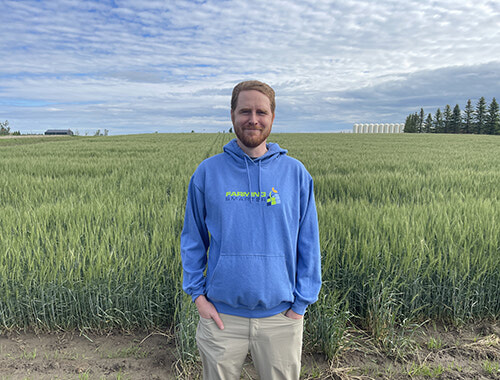
From Utrecht to Lethbridge, Dr. Thierry Fonville's journey to Farming Smarter includes more than 7,000 kilometers along with a venture into archeology research in the U.K. Now, Thierry's work focuses on bringing farmers across southern Alberta relevant research to aid their farms.