
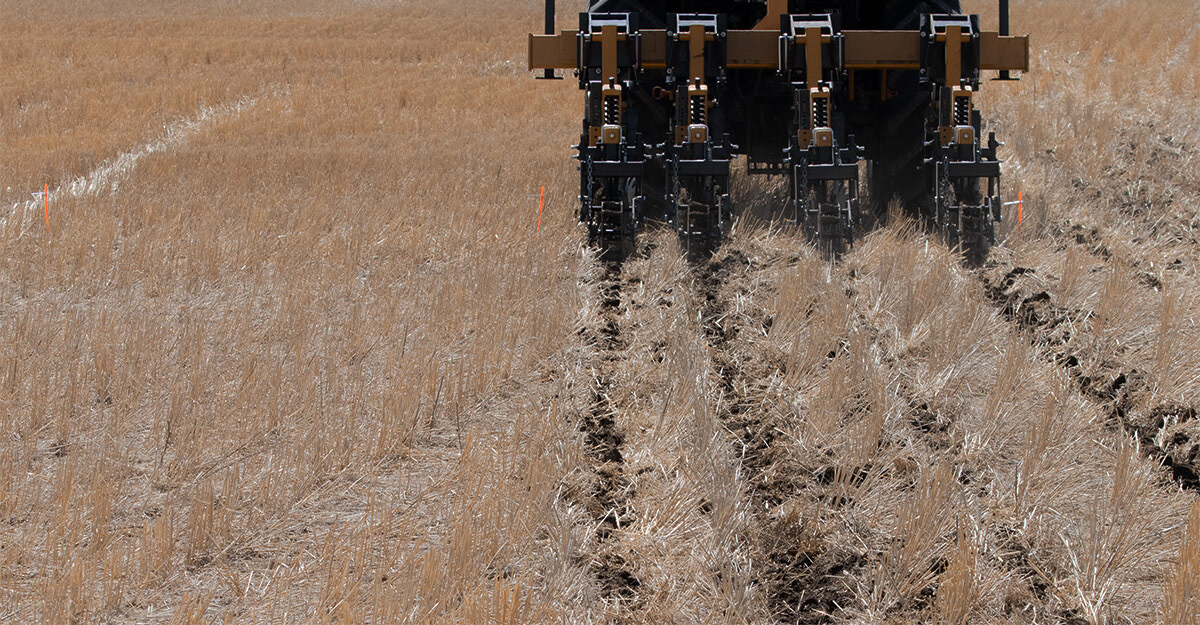
BackgroundConservation tillage practices including no-tillage and reduced tillage have been widely adopted in the Canadian prairies. However, proper residue management of the previous crops is challenging, which may lead to cold and wet seedbed conditions and improper seed to soil contact during seeding. Despite the availability of high-quality canola (Brassica napus L.) seeds, initial crop establishment in the fields has been observed to be variable and low (approx. 50%). Lack of residue management can further impact canola emergence and seedling survival. Higher seedling emergence is required for improved canola yield and seed quality. This study proposes to test the efficiency of management practices including strip tillage and precision planting in managing crop residues and improving canola emergence, growth, and yield. |
|
||||||||||
Project ObjectivesStrip tillage will be compared to zero-tillage and conventional tillage practices for their effect on crop emergence and seed yield of conventionally sown and precision-planted canola on dryland and irrigated farming systems. In addition, precision planting of canola will be compared to conventional seeding methods including 1-inch narrow knife opener, a 3-inch hoe opener, and a disc-hoe opener.
|
MethodsSmall plot field trials will be conducted for three years under dryland and irrigated conditions at two locations in dark-brown and brown soil zones, respectively. This study will consist of three tillage systems ≥ strip tillage, no tillage and conventional tillage. Four seeding methods will be tested, including precision planting and three conventional seeding methods. |
||||||
Prior to seeding, soil samples will be tested for nutrient content to determine fertilizer requirements at each site. Herbicide spray applications will be performed as per the recommended schedule for the region at each site. |
Measurements
|
||||||||
Results
|
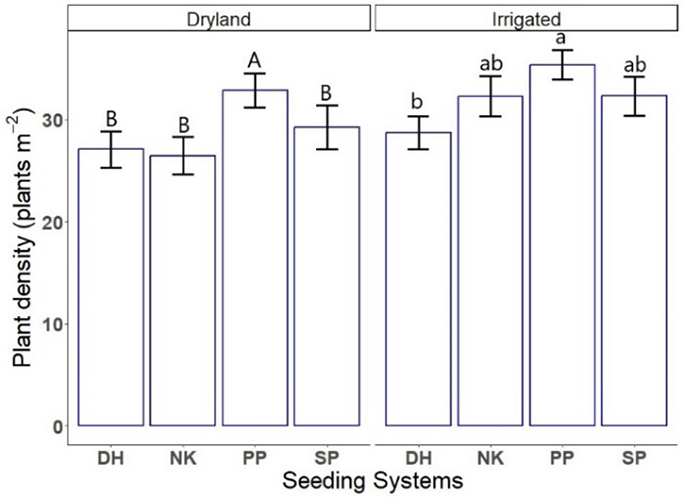
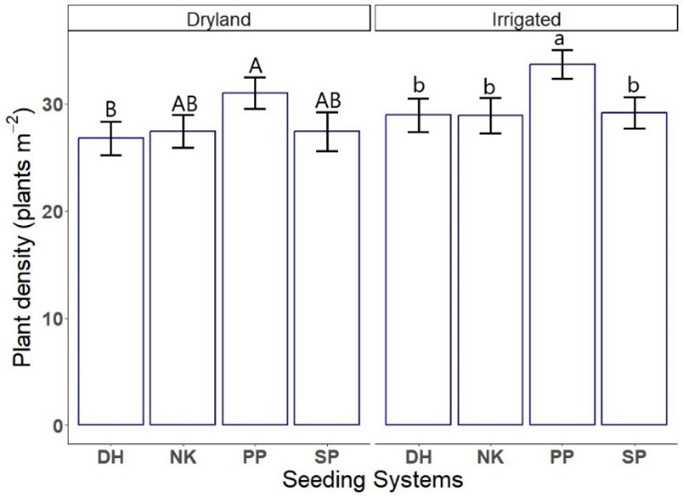
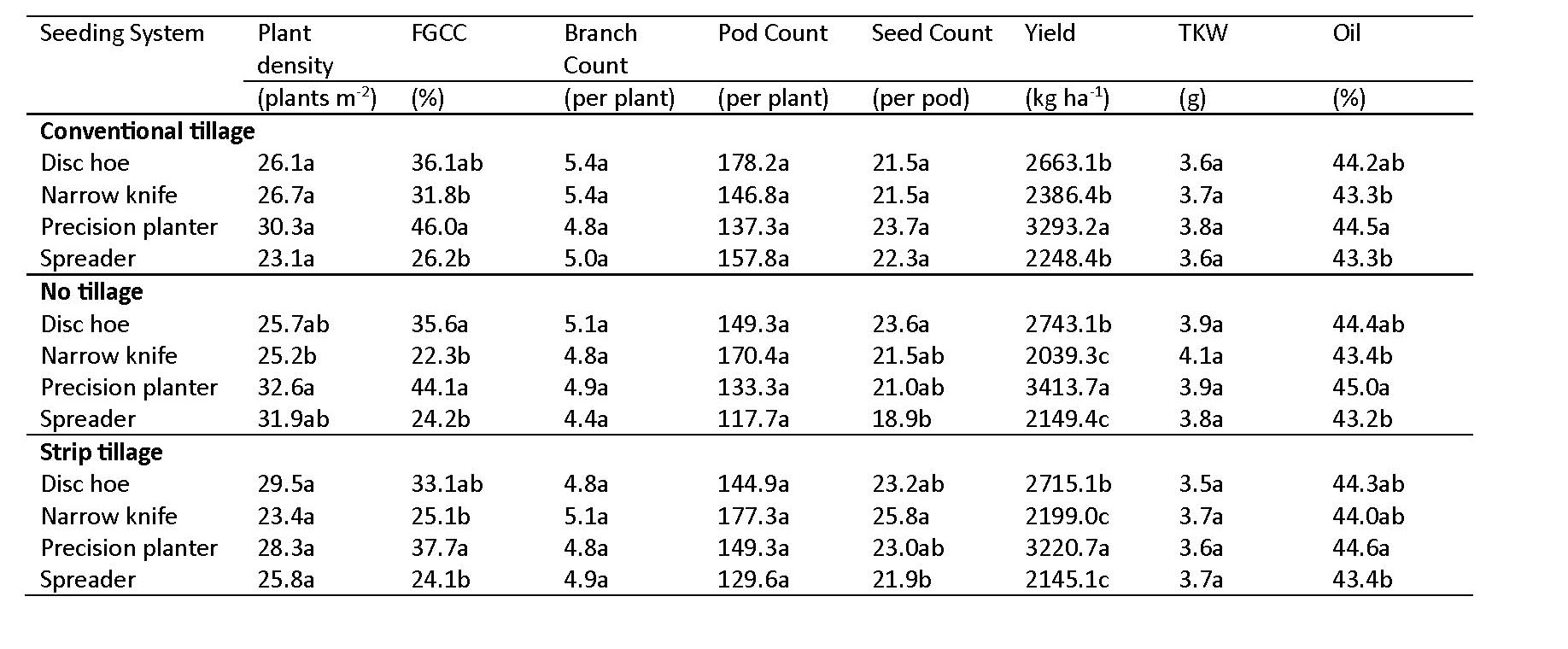
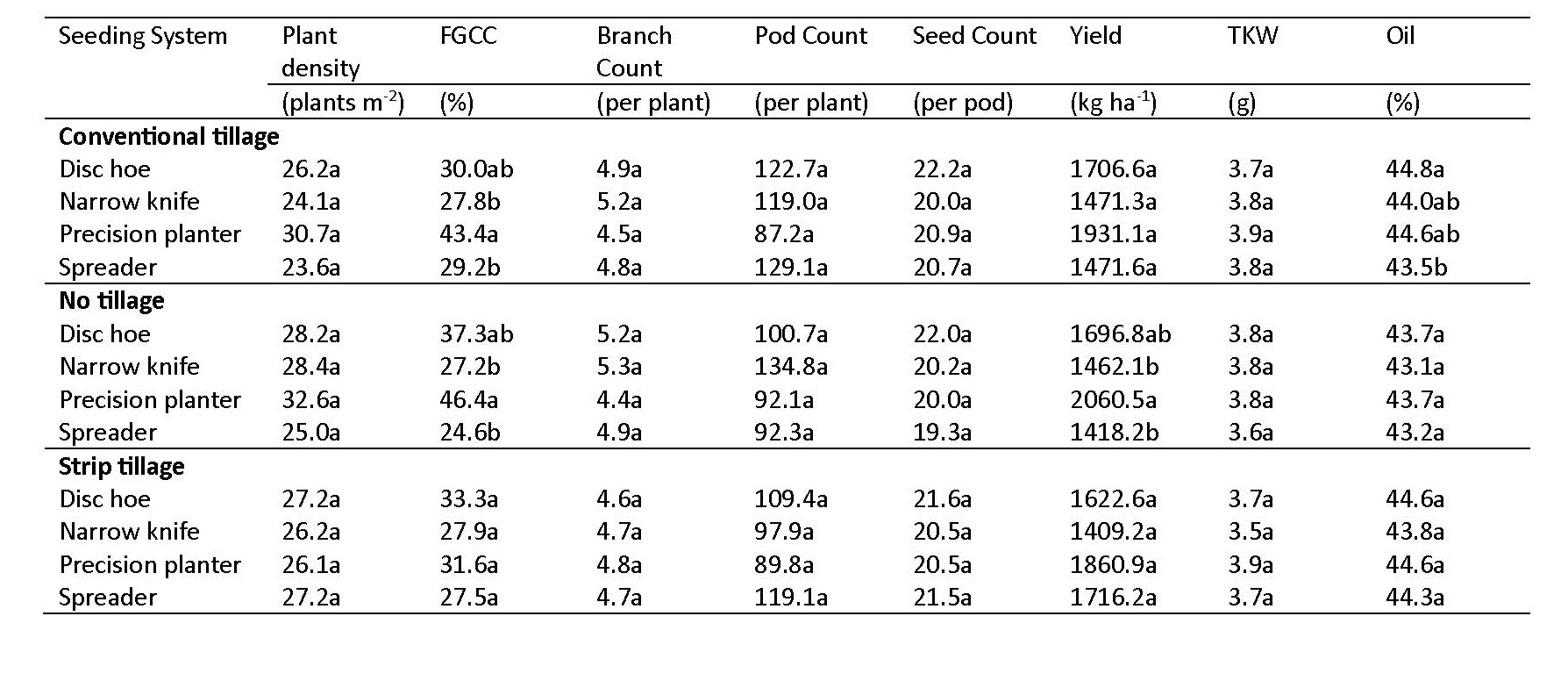
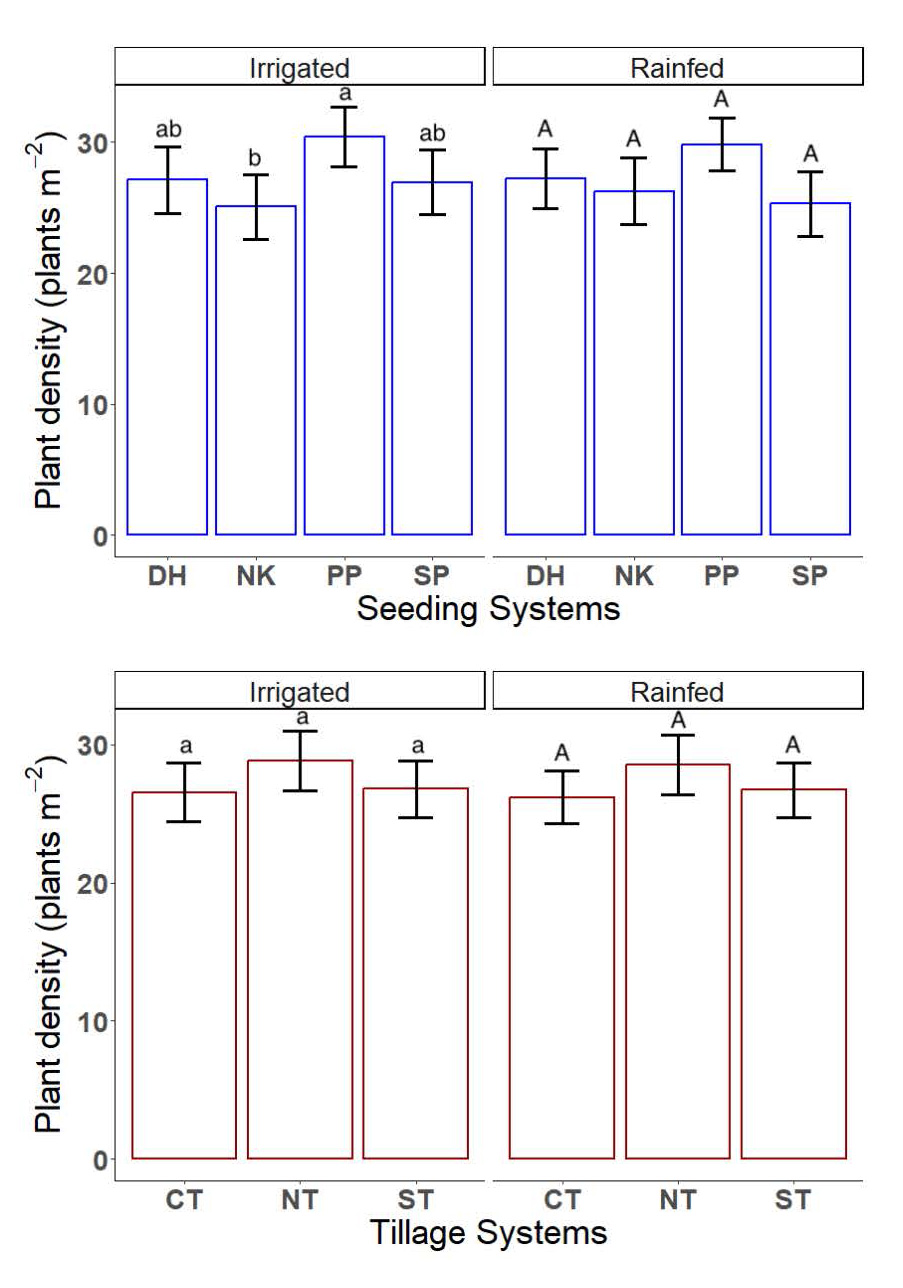
Precision planters demonstrated superior depth control and enhanced seed-to-soil contact, while facilitating consistent seed placement at specific intervals along the seed row. This uniform distribution promotes better resource utilization and can facilitate rapid crop growth and help obtain canopy closure quicker than other methods. Additionally, these attributes directly contribute to improved stand establishment. We saw significantly improved canola stand establishment when measured at the 2-4 leaf stage. Furthermore, post-harvest stubble counts showed an increased stand density overall. We observed similar trends of improved performance with precision planters under both rainfed and irrigated conditions. In our dryland trials, canola stand establishment at the 2-4 leaf stage was 12-24% better & canola stand density at maturity was 13-16% better. Meanwhile, stand establishment improved by 24% (compared to disc hoe seeding) and stand density by 15-17% at the same stages under irrigation.
|
|||||
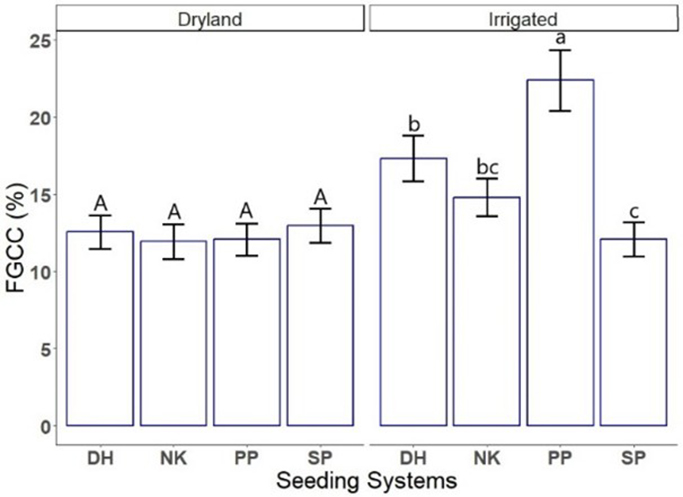
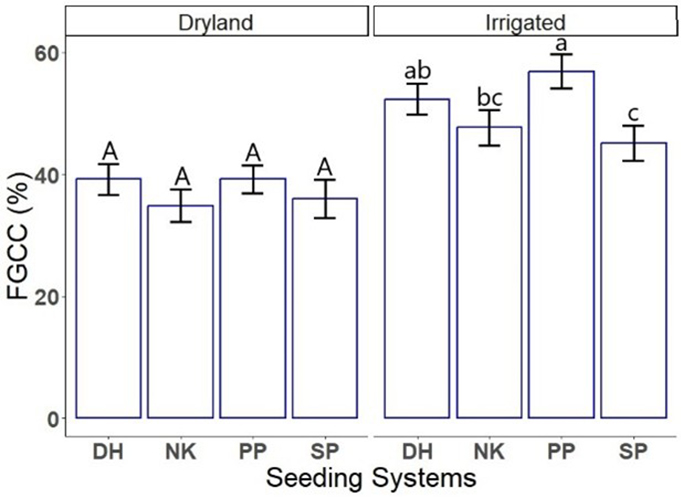
| Precision planters also improved canopy closure compared to other seeding methods, particularly under irrigation. Fractional green canopy cover (FGCC) of irrigated precision planted canola was 1.3-1.9 times higher 4-5 weeks after seeding and remained higher by 1.1-1.3 times by weeks 6-8. Although, there were no FGCC differences observed between seeding methods under rainfed conditions. | |||||
|
|||||
|
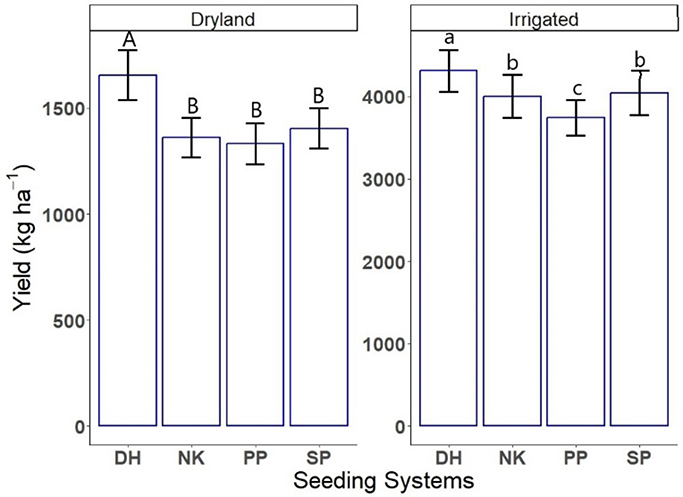
However, the improved growth performance observed did not improve canola yield. Canola yield was lower in both irrigation and dryland trials with precision planting. Under irrigation, the disc hoe opener had 15% higher yields while the narrow knife and spreader openers had 7-8% higher yields compared to the precision planter. Similarly, the disc hoe opener improved yields by 18-24% compared to all other seeding methods on our dryland sites. |
|||
|
|
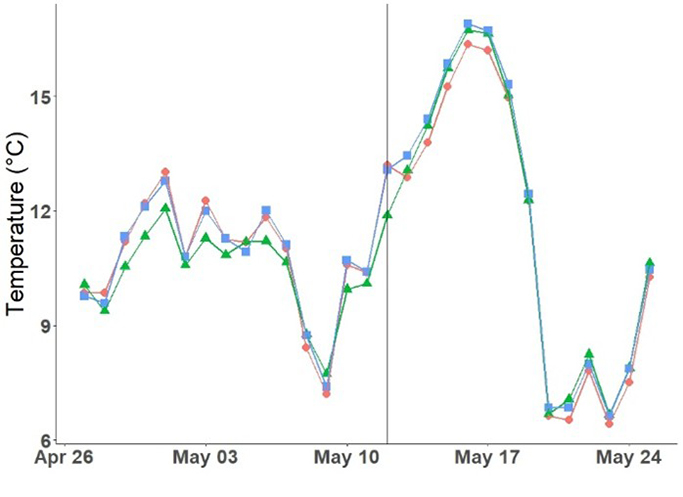
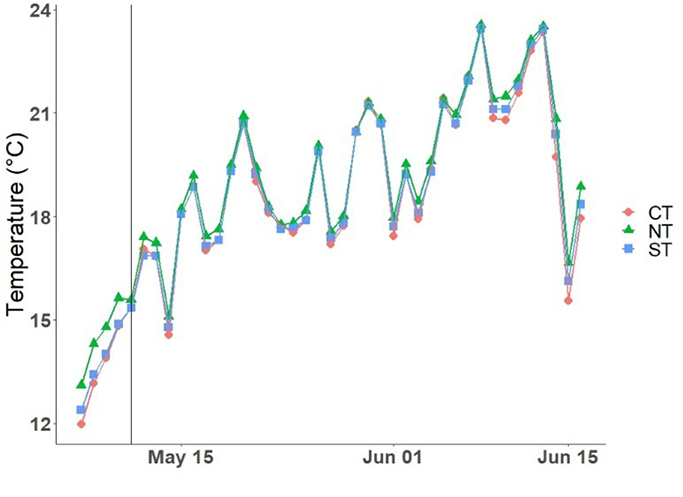
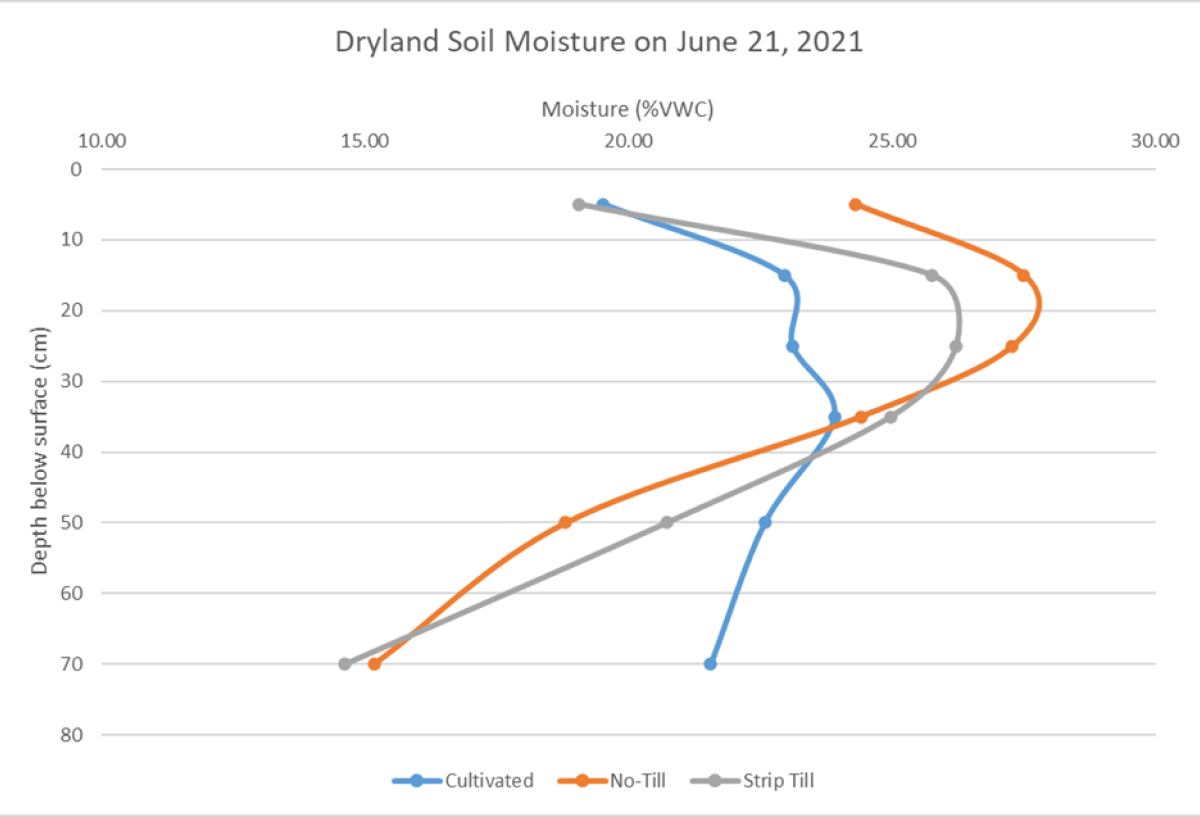
The reduced yield may be attributed to the higher row widths resulting from the precision planter. 15" rows creates more inter-plant competition between rows and thus may decrease seed yield. Drought conditions may be another contributing factor to the low yields, as growing season precipitation ranged from 41-88% of the respective long-term (30 years) average of study locations throughout the duration of this project. Previous studies have established that precision planting is less effective compared to air seeding under water-limited conditions (Dhillon et al. 2022). Tillage methods did not have a notable impact on soil properties including soil temperature and soil moisture. While conventional tillage and strip tillage had higher soil temperatures compared to no-tillage, there was little difference as cross correlation between temperature curves was very high within the growing season. |
|||||||
|
|||||||

|
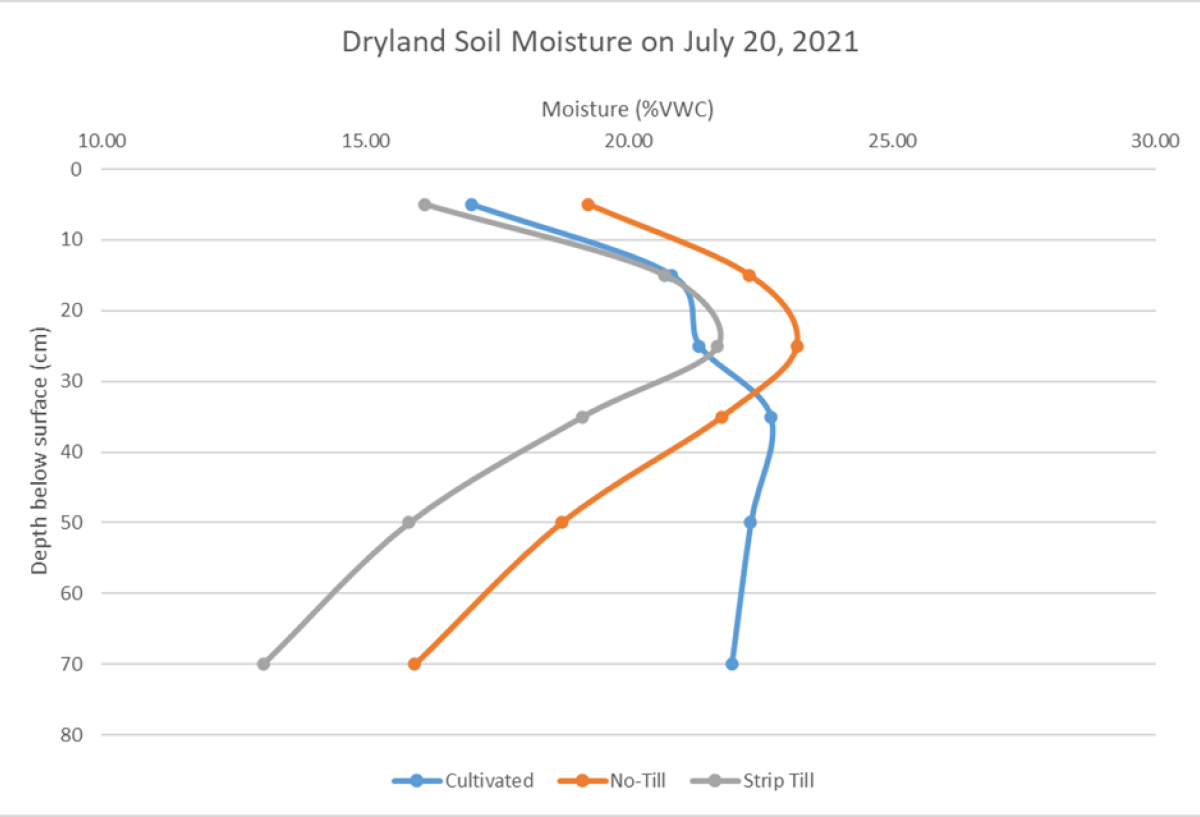
Soil moisture content was marginally higher in the no-tillage system than in the other tillage systems; however, these differences were not statistically significant. Furthermore, tillage systems did not seem to impact canola growth and yield. Crop growth parameters like stand density (2-4 leaf stage) and maturity did not have statistically significant outcomes of tillage. Similar results were observed with FGCC at 4-5 weeks and 6-8 weeks after seeding. |
|
Under rainfed conditions, there was an increase in canola yield under no-tillage compared to conventional and strip tillage (13% and 9% increases, respectively). This increase may be linked to better moisture retention, which may have been critically important due to the drought conditions that existed for the majority of the project duration. Meanwhile, under irrigation, canola yield was not influenced by tillage systems. However, no-till and strip till are expected to provide ecological benefits like reduced soil erosion, improved soil health, and carbon sequestration in the long term. |
2022 Data
|


2021 Data
|

RecommendationsCanola producers can use the guidelines from this study to improve their agronomic practices for improved productivity and sustainability. Similarly, industry stakeholders like seeding equipment manufacturers may also benefit from the findings of this project to further improve their equipment design to meet industry needs.
Project Playlist
|
Articles
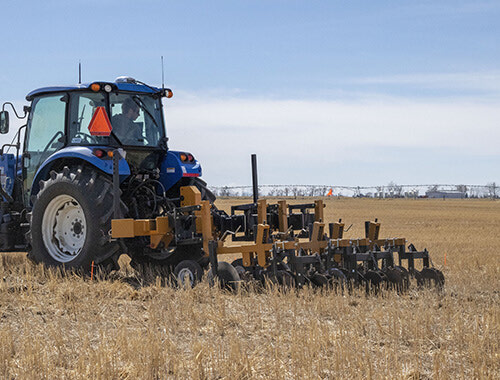
Zero and minimum till fields can experience trash build up that affects seed to soil contact in the spring. Strip tillage may provide some relief for these fields - Farming Smarter digs into the answers with latest study.
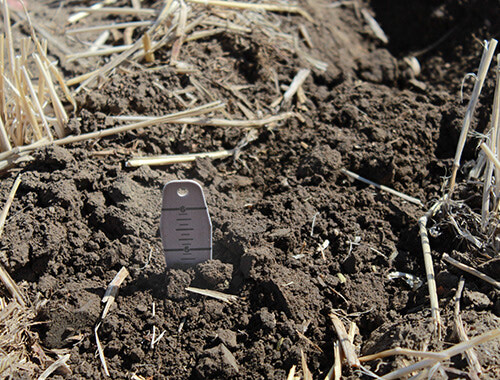
Moisture is an important choice in a soil till method - it can be difficult to know which is best for your crop. Our strip till canola study tracks soil moisture throughout the growing season for multiple methods to help you make that decision.
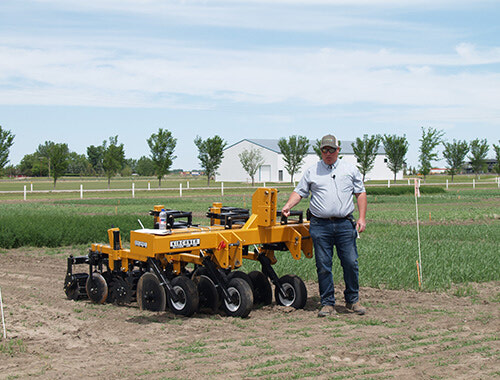
The Natural Sciences and Engineering Research Council (NSERC) of Canada approved a three-year grant to fund a strip tillage and precision planting at Farming Smarter.
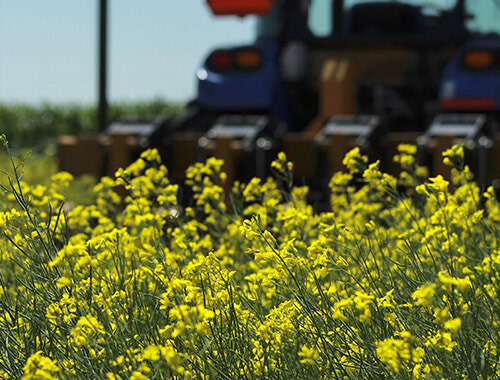
Southern Alberta canola producers stand to benefit from a joint research project by Lethbridge College and Farming Smarter to boost canola yields.